The Architect: What a $5M Contractor Business Actually Looks Like
You know what Stage 4 looks like. You've met her.
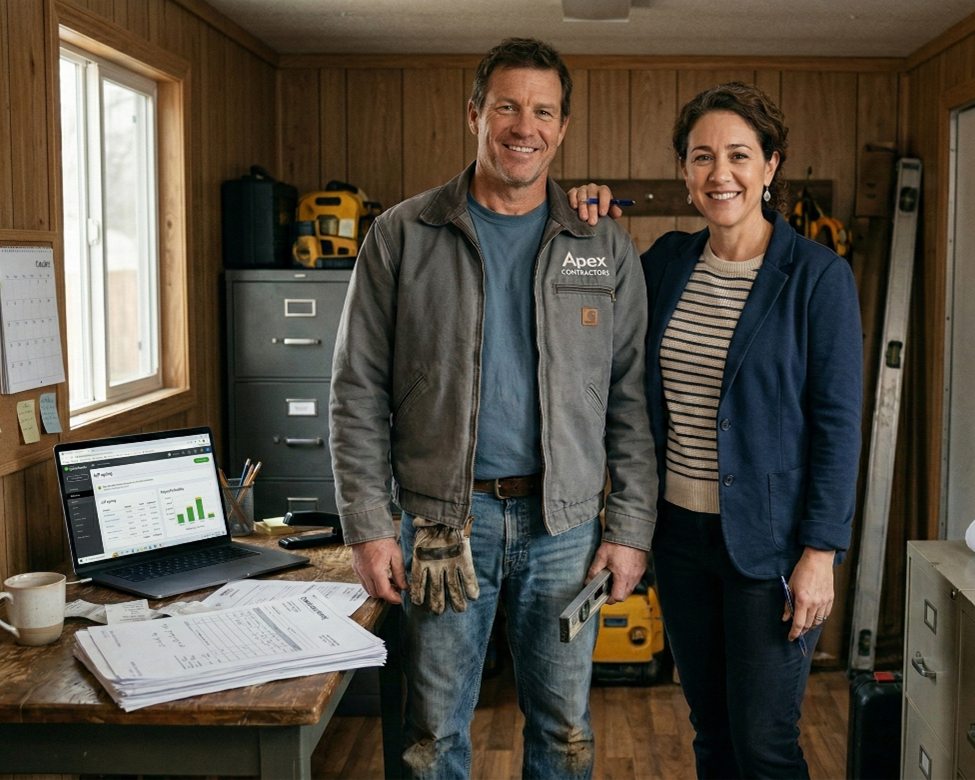
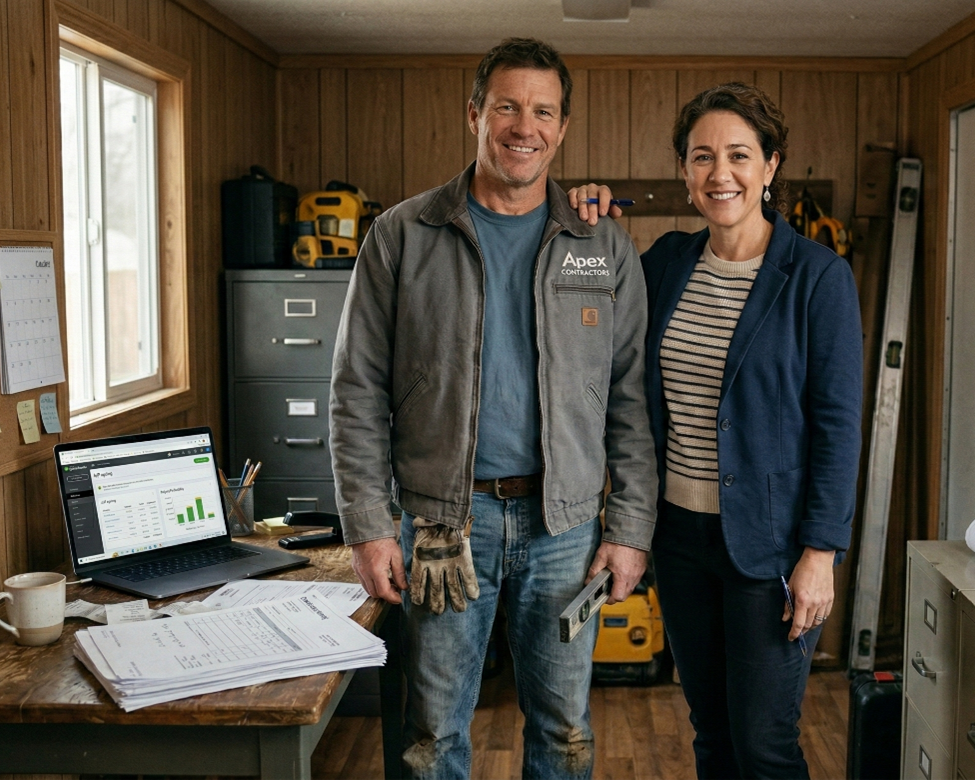
She owns a trades business — construction, HVAC, maybe plumbing. Similar market, similar revenue. But when she talks about her business, something is different. She's not white-knuckling it. She knows her numbers cold. She took two weeks off last summer and came back to a business that ran without her.
You left that conversation wondering what she knows that you don't.
Most contractor businesses never get to Stage 4. Not because the revenue isn't there. Because nobody ever showed them what it actually takes to get here.
What Stage 4 Actually Looks Like
It's not a bigger version of what you're doing now. It's a fundamentally different relationship with your business.
She takes the vacation. Real one — hotel, kids, her husband, the whole thing. Both phones stay in the room. She checks in once on a Tuesday because she wants to. The business ran. Not perfectly. But it ran — and she knew it would before she left.
A banker asks what her business is worth. She gives him a number. She knows it's right because she sat down with her advisor six months ago, ran the analysis, and has been tracking toward it since.
April comes. The accountant calls. The number isn't a surprise — they planned for it in October, adjusted in January, set the money aside in March. She writes the check without flinching.
She decides to take Friday afternoons off. Not because it's slow. Because she built the thing so she could.
That's Stage 4. The Architect.
What Separates the Businesses That Get Here
It's not harder work. Every stage of this journey is hard work. The Stage 3 owner is working harder than anyone.
What's different is intentionality. The Architects who make it here didn't get lucky. They got clear — on what the business was worth, where the money was going, and what the next three years needed to look like. They stopped reacting to the year after it closed and started building a plan before it started.
The businesses that plateau at Stage 3 are profitable. They're busy. They're doing good work. But the financial picture never quite matches what they've built — because nobody is sitting in the CFO seat alongside them, running the numbers, and saying "here's what this means and here's what you do about it."
That's not a business problem. That's a support problem.
What It Takes to Get Here
A true financial partnership — not a tax preparer, not a bookkeeper. Someone who treats your business like the asset it is, so that you know what the numbers mean before the year closes, not after.
Proactive tax strategy that starts in January, so that April is a formality instead of a reckoning. And real clarity on what your business is worth and where it's going — so that when the next decision comes, you already know the answer.
The Architects who make it here didn't figure this out alone. They stopped trying to.
At Stage 4, the decisions you make in the next twelve months shape the next ten years. That's how compounding works — in both directions.
You've already built something most people never do. The question is whether your financial strategy is built to match it.
Read the full 4 Stages framework: 4 Stages of Contractor Business Growth
To find your stage, go to Start Here.
Leslea Burnett-Little, EA, is the founder of Simply Balanced Accountants. She works exclusively with women who own and operate contractor businesses in Michigan — helping them get clear on their numbers, keep more of what they earn, and build a business that works for their family.