
The Operator Stage: Why Doing More Isn't the Answer
The question most Stage 3 owners are actually asking is: how do you go from a $3 million company to a $5 million company?
You are never going to get there if you're the one answering the phones on vacation.
This is Stage 3. The Operator.
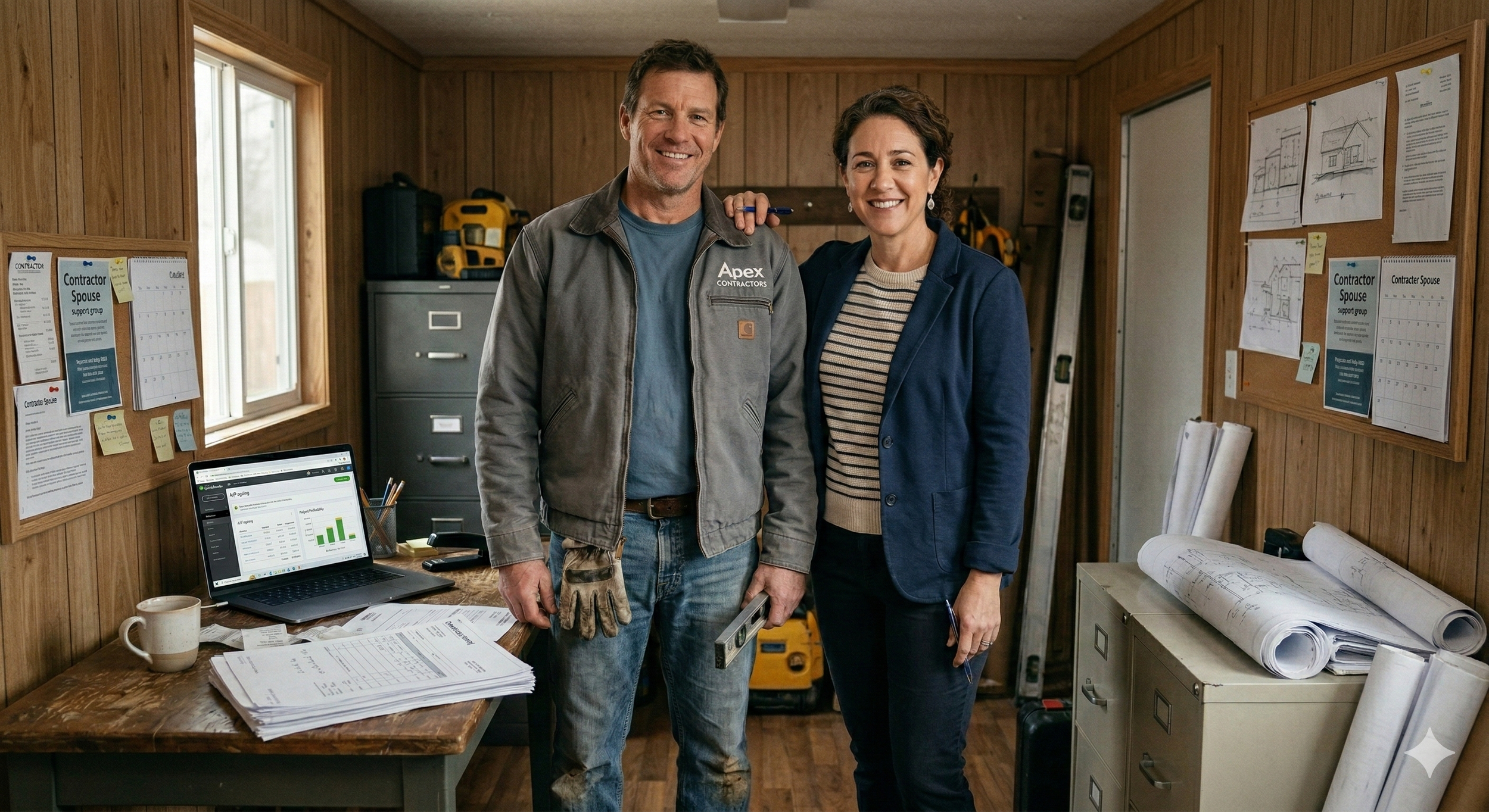
From the outside, it looks like success. Multiple crews. Real equipment. A name people recognize in your market. The business is running — and it took years of hard work to get here.
But here's what nobody tells you: both of you are the ceiling.
He can't leave the field because the field still needs him to make every call. You can't step back from the office because the office still runs through you. There's no real leadership layer between the crews and ownership — so every problem, every question, every judgment call routes back up to the two of you.
You planned a family vacation. Real one — kids, hotel, the whole thing. Your phone rang on day two. Not because there was an emergency. Because you're the only one who knows the answer. He got a call too — job site question nobody else could make the call on. You both spent the drive home catching up on everything that piled up while you were supposedly off.
That's not a people problem. It's a structure problem. And it shows up in the financials too.
The Signs You're Still Here
The quarter closes out strong on paper and the bank account still doesn't reflect it. A big project came in, payroll went out, materials hit on three open jobs — and you're doing the math again. You can't figure out the pattern. It just keeps repeating.
You look at the numbers at the end of the month and everything is up — revenue, jobs closed, crew count. But the margin feels thinner than it did two years ago, and you can't point to where it's going. Some jobs feel like real wins. Others feel like you worked for cost. You don't have the breakdown to know which is which.
Your accountant calls in March with the number. It's bigger than you expected — again. You write the check, tell yourself you'll plan better this year, and move on. There's no mid-year conversation. No strategy. Just the bill.
You hired a project manager. An office admin. Two more crew leads. And you're still the one the calls route to at 7pm. Still the one who knows where everything is. Still the last one to leave. That wasn't supposed to be how this worked.
What Gets You Out
The answer isn't more jobs or more crews. It's clarity. Knowing which work is profitable, which clients are worth keeping, and where the money is going before the year closes — not after.
Cash flow forecasting that runs ahead of the business, so that you're not surprised by what's coming — you're ready for it.
Tax planning that starts in January, not April, so that the bill isn't the first time you've thought about it all year.
And an advisor who knows your numbers well enough to tell you where the margins are leaking before the year closes — so that you can actually do something about it.
Stage 3 isn't where the business breaks. It's where it decides. The ones that break through get clear on the structure, the finances, and the plan. The ones that plateau stay busy — and wonder why busy doesn't feel like enough.
Read the full 4 Stages framework: 4 Stages of Contractor Business Growth
To find your stage, go to Start Here.
Leslea Burnett-Little, EA, is the founder of Simply Balanced Accountants. She works exclusively with women who own and operate contractor businesses in Michigan — helping them get clear on their numbers, keep more of what they earn, and build a business that works for their family.