
The Hustle: What Stage 1 Really Looks Like
You remember how it started.
He was good at the work. You were good at everything else. Someone paid you. Then someone else did. And suddenly you weren't just married to a guy in the trades — you were running a business. Whether anyone planned it that way or not.
This is Stage 1. The Hustle.
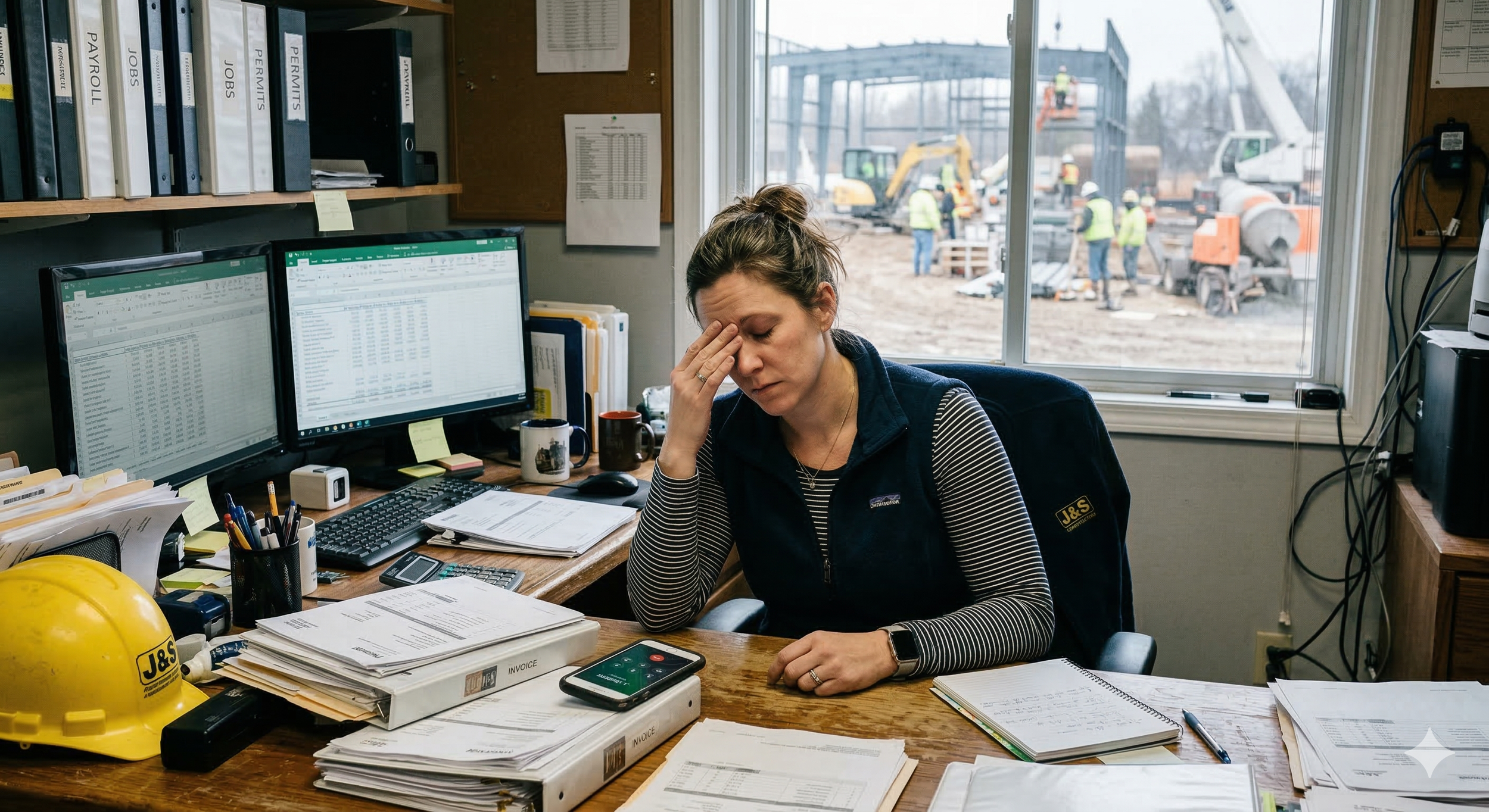
He's in the field. You're at the kitchen table at 9pm trying to reconcile the bank account, chase down a late payment, and figure out why QuickBooks doesn't match what you see in the checking account. You're the office manager, the bookkeeper, the collections department, and the person who stays up Sunday night getting everything ready for the week.
Revenue is growing. But so is the mess behind it.
Here's what nobody tells you: the hustle is supposed to be temporary. It's the launchpad — not the business model. But too many contractor businesses stay in Stage 1 for years because money keeps coming in and that feels like proof it's working.
It isn't. Not if you can't take a vacation without the whole financial side falling apart. Not if tax season still catches you off guard every single April.
The Signs You're Still Here
It's Sunday night and you're at the kitchen table with QuickBooks open. Not because something went wrong — because this is just how the week starts. The books don't keep themselves and you're the only one who knows where anything is.
Someone asks what your profit margin is. You give them a number. You're not sure it's right. What you actually know is that there's usually money in the account. Usually.
Tax season arrives and you scramble. You pull together what you can, hand it to whoever does your return, and the number owed is higher than you expected — again. You tell yourself next year will be different.
You're doing the work of a CFO. You're being treated like the bookkeeper. By vendors, by the bank, sometimes even at home. And you don't have the reports to prove what you already know about your own business.
What Gets You Out
The exit from Stage 1 isn't more revenue. It's structure.
Separating the business account from the personal one — for real. Having financial reports you can actually read, so that you're making decisions with numbers instead of a gut feeling. Knowing your job costs, your overhead, and your break-even number so you can answer the hard questions without hesitating.
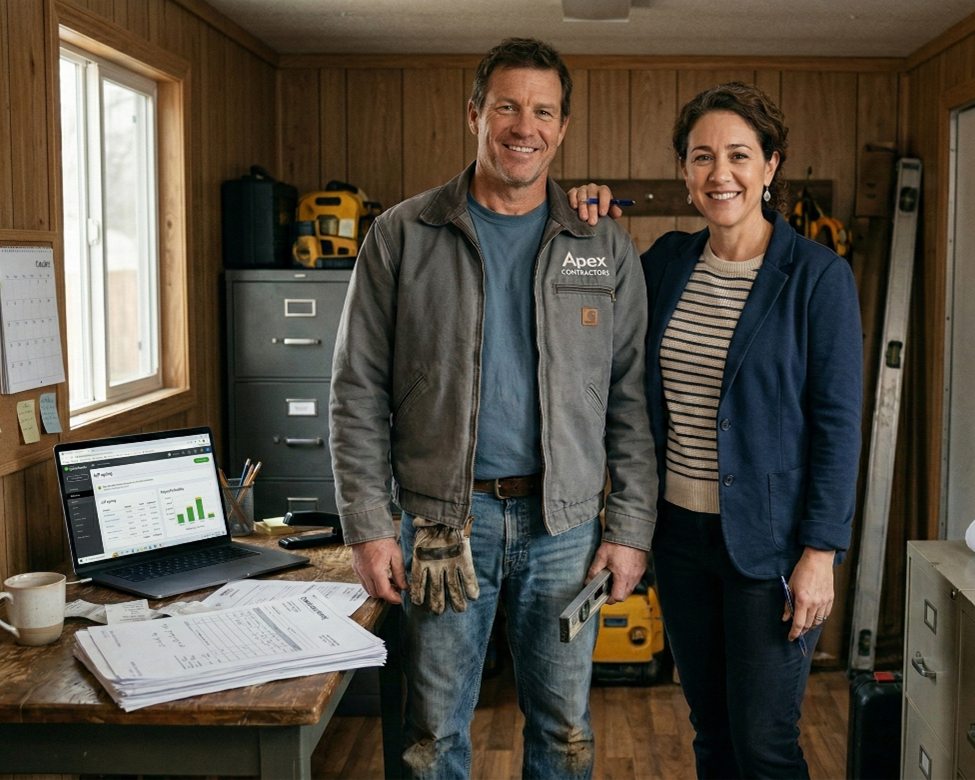
And a financial partner who looks at your numbers and tells you the truth — someone who understands contractor businesses, the seasonality, the cash flow cycles, the way growth sneaks up before the systems are ready.
The decisions you make in Stage 1 set the foundation for everything that comes after.
Read the full 4 Stages framework: 4 Stages of Contractor Business Growth
To find your stage, go to Start Here.
Leslea Burnett-Little, EA, is the founder of Simply Balanced Accountants. She works exclusively with women who own and operate contractor businesses in Michigan — helping them get clear on their numbers, keep more of what they earn, and build a business that works for their family.