The Builder Stage: She Stepped Up. The Business Hasn't Caught Up Yet.
You hired people. That was supposed to make this easier.
A job closed last week. Client paid. You figured you made good money on it. Then the material invoices hit — the ones from mid-job, the ones you approved fast because the schedule was tight. And now you're not sure. You think you came out okay. But you can't prove it.
This is Stage 2. The Builder.
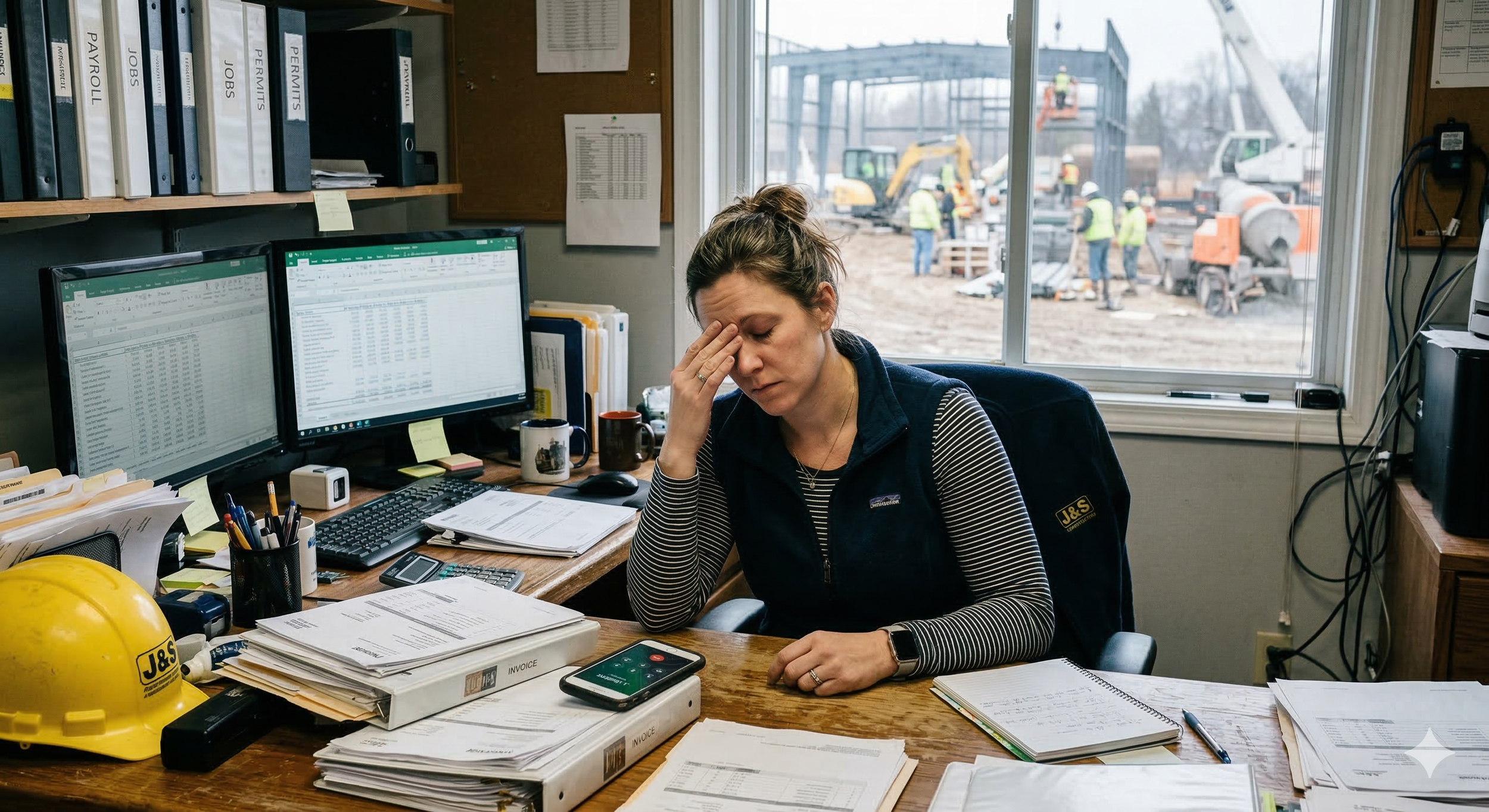
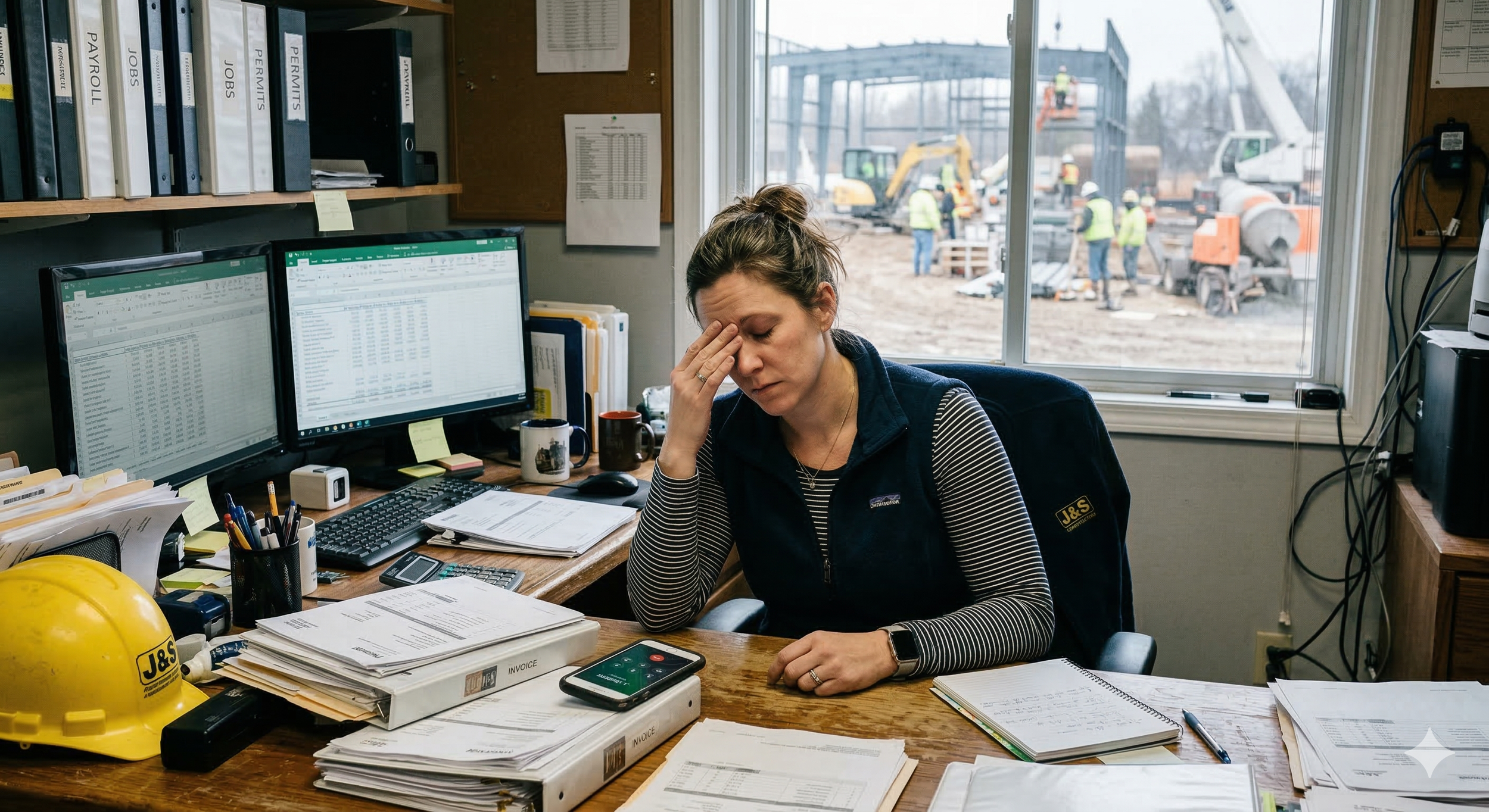
Here's what nobody prepares you for: the moment the field side of the business keeps growing, someone has to run everything else. The estimating, the scheduling, the client relationships, the books, the payroll, the vendor payments. All of it lands somewhere. And in most contractor families, it lands on her.
That's not a complaint — it's a description. You stepped into the financial and operational seat because someone had to, and you were the one who could. You taught yourself QuickBooks. You figured out payroll. You track down the late payments. You stay up Sunday night getting the week ready.
You're doing the work of a CFO. Nobody's calling you that.
And here's the part that doesn't get said enough: Stage 2 is where businesses start winning bigger jobs. It's also where they start losing money without knowing it — because job costing usually isn't in place yet. Revenue looks strong. The bank account tells a different story. You can be scaling a losing model and not find out until it's a real problem.
The Signs You're Still Here
The month closes out and you genuinely can't explain where the money went. Payroll went out. Materials got paid. Invoices came in. The account doesn't reflect what you expected, and you've stopped trying to understand the pattern because there's too much else to handle.
A job wraps up and your husband asks how it went. You pull up the invoice, subtract what you remember paying out, and give your best guess. But the materials that got added mid-job, the extra days it ran, the sub you called in last minute — you don't actually know if you made money on it. You think so.
You have a system. It's just not a good one. Maybe it's a spreadsheet you built yourself, or a folder full of receipts, or whatever you can pull together between everything else. It works until it doesn't.
Your accountant is a tax-time-only relationship. They file the return, you pay the bill, and the next conversation is twelve months away. There's no planning. There's only reacting.
What Gets You Out
Job costing — real job costing, so that you know which jobs to chase and which ones are eating your margin before you're already committed.
Monthly financial reports you can actually read, so that you're making decisions with current numbers instead of waiting for April to find out how the year went.
And a financial partner who understands contractor businesses well enough to flag a problem while there's still time to fix it — not after the year closes.
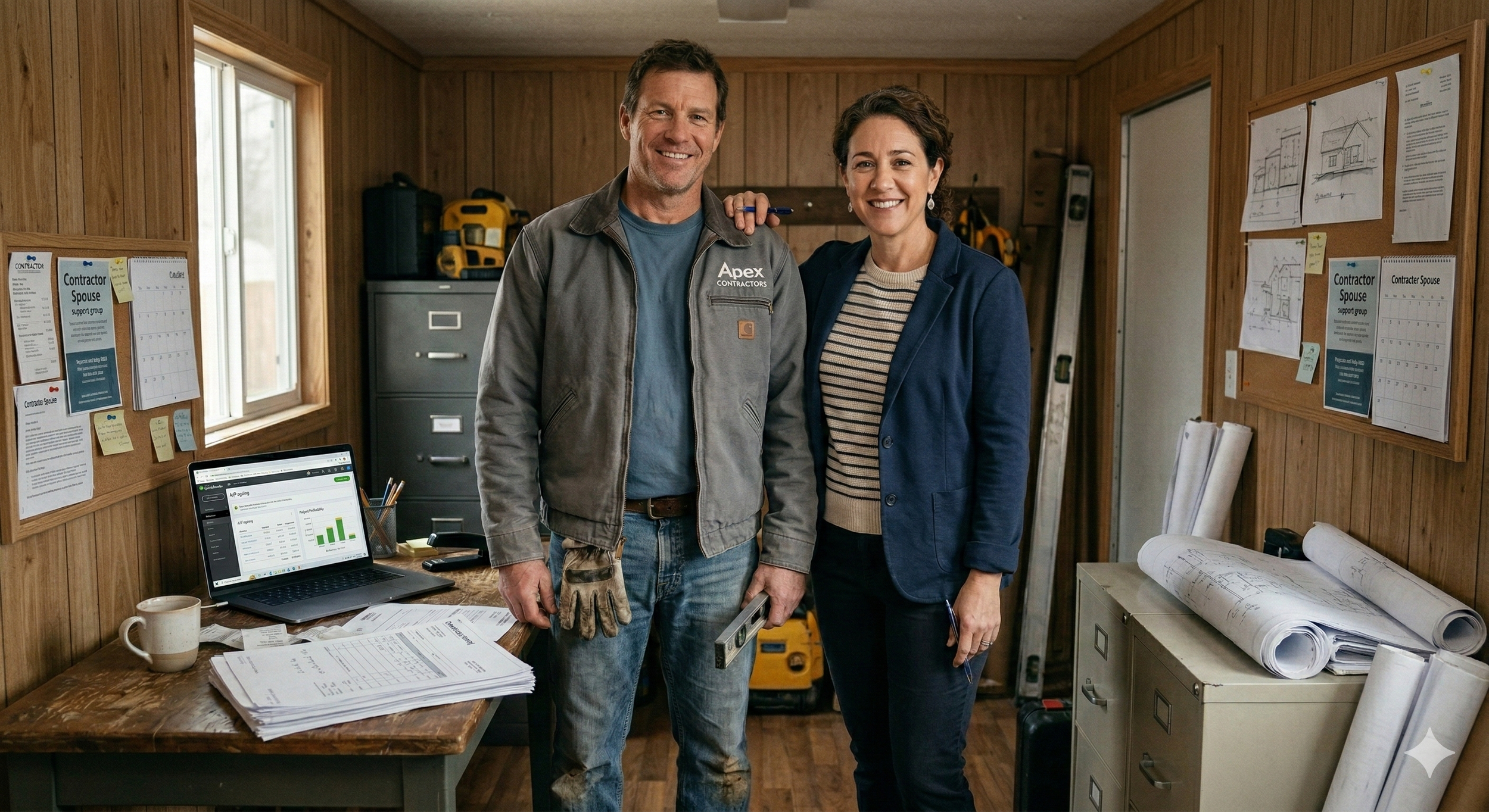
You built something real getting here. Stage 3 is what makes it sustainable.
Read the full 4 Stages framework: 4 Stages of Contractor Business Growth
To find your stage, go to Start Here.
Leslea Burnett-Little, EA, is the founder of Simply Balanced Accountants. She works exclusively with women who own and operate contractor businesses in Michigan — helping them get clear on their numbers, keep more of what they earn, and build a business that works for their family.