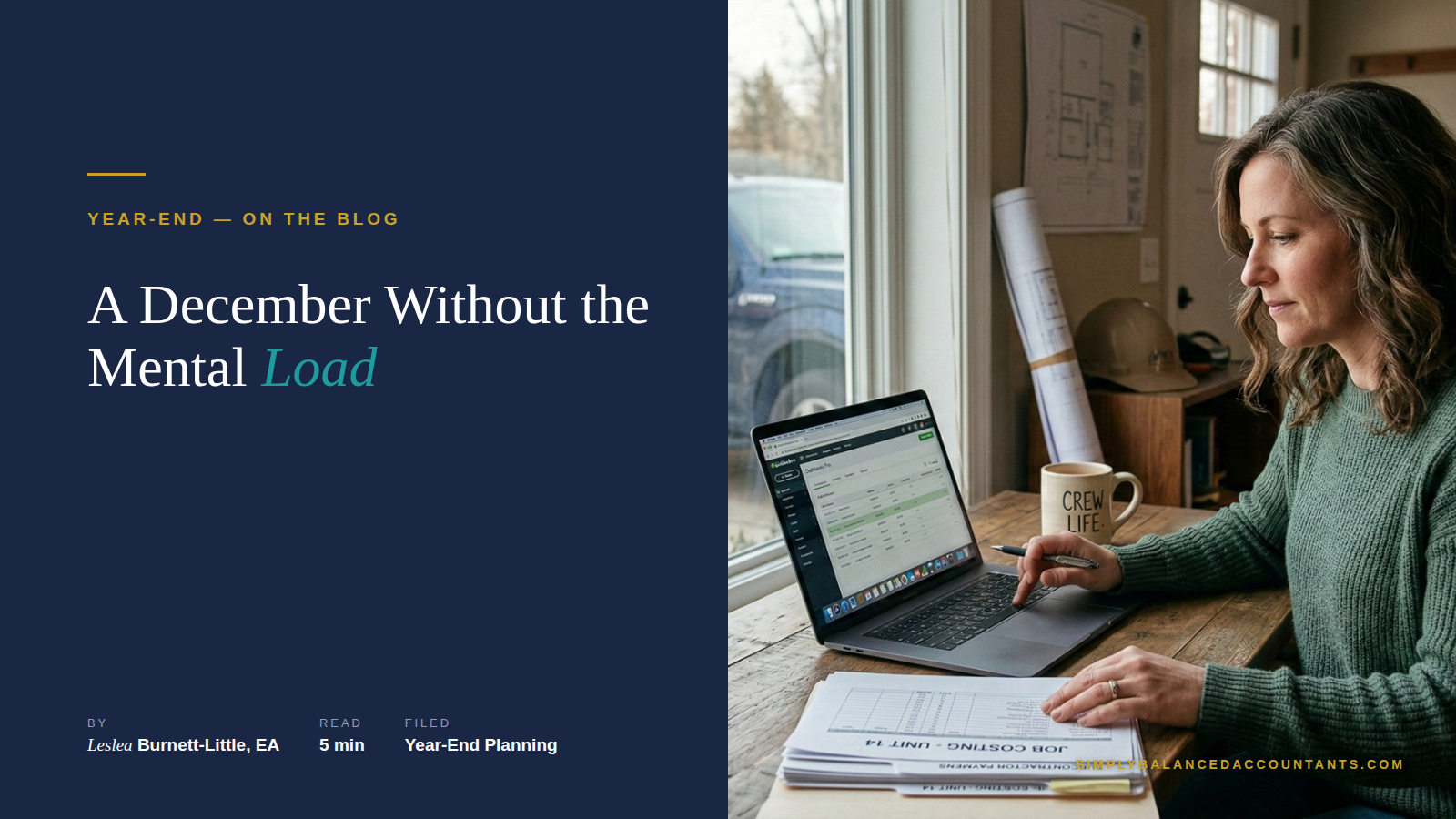
A December Without the Mental Load
It's Christmas break. The kids are home for two weeks, and this year, so is she.
The office is closed. The crews are off until after New Year's. She's taking both weeks off, the same two weeks the kids have off. Sledding, a movie in the middle of the afternoon, a late breakfast on a Tuesday because nobody has to be anywhere.
And for once, her head is home too.
In other years, she sat down to Christmas dinner and ran numbers in the back of her mind. Did payroll clear? What's the tax bill going to be? How are we covering January? This year, every one of those questions already has an answer.
She knows what she'll owe in the spring, give or take. She knows her guys are covered through the slow months. She knows what January looks like, down to the insurance renewal and the equipment payment, and the money is already set aside for both.
That's what it looks like when the mental load comes off. I want to show you how she got there, because it started back in October.
How her October started.
She runs a business with an office staff and a few crews in the field. Her year was as busy as anyone's.
Every quarter, I go into her QuickBooks to make sure her numbers are right. The October visit matters most, because it covers the first nine months of her year. By then, most of the year is on paper, and there's still time to act on what it shows.
By the time we sat down, her QuickBooks questions were answered. The equipment she bought this year was recorded. The pile in "Ask My Accountant" was cleared. That work was the setup, so that everything we talked about next was built on numbers she could trust.
Then she pulled out her list. She'd been saving questions since summer, the same kind you've been saving. Can I take more out before the end of the year? What about retirement? What happens to the guys in January when the work slows down? Is the year going to end where I think it is?
We answered every one. Some took a minute. A couple took a real conversation, with her numbers open between us. By the end, the list was crossed off, and nothing on it was going to follow her into the holidays.
The punch list she walked out with.
From those answers, we built her plan for the rest of the year. It covered four things.
Owner pay. How much she'd take for the rest of the year, and how, set before the payroll company's December cutoff.
Retirement. For an owner on payroll, her own contributions run through payroll, so they have to be set up before the last payroll of December. We decided the amount in October, and the payroll company had it with time to spare.
Winter pay for the crews. Her guys are her business. We planned what their pay looks like through the slow months, so it's a decision she made in October, with time to plan around it.
Getting through the winter. Cash set aside, spending timed, and a clear picture of what January through March would look like before January ever got here.
Four items on her punch list, each with a date. All she needed was her numbers in front of her and someone whose job was to walk through them with her.
She knew how the year was going to end.
That's the sentence I hear most from clients after a year-end meeting, and it's the one I care about most.
She felt supported and ahead of the game, instead of carrying every one of those questions around by herself. The payroll cutoff came and went, and she'd already made her call. The last invoices went out in December, and she knew where each one would land. When the slow weeks started, her crews already knew what their checks would look like.
I hear a version of that same sentence from women who haven't had that meeting yet. It usually sounds like, "I just want to end the year knowing, instead of guessing." Knowing is exactly what she got. And knowing is what took the weight off. The questions that used to follow her into every holiday had already been answered.
What "different" really takes.
Back in January, you told yourself this year would be different. You probably pictured a big change. New software. A new system. A fresh start.
Here's what I've learned from years of year-end meetings. "Different" almost never takes a new January. It takes one sit-down in the fall, with your real numbers in front of you and your list of questions answered.
One October meeting changed how her year ended.
Back to Christmas.
She isn't at the kitchen counter catching up on QuickBooks while the kids watch a movie without her. She's on the couch with them. When they want to go sledding, she goes. And when she sits down to Christmas dinner, she's all the way there, with nothing running in the background. The year was handled back in October, and January is already planned.
That's what "this year will be different" looks like when it's kept. A Christmas with your family, and your mind free to be with them.
Now, the in-laws are still coming for Christmas dinner. That part of the holiday load is all yours. The taxes and the books, though? Those I can take off your plate.
The kids get two weeks off. Now, so can you.
If you want someone to look at your year before it closes, book a Year-End Walkthrough. We walk through your real numbers, answer your questions, and you leave with a punch list for closing out the year. Let's Talk
Leslea Burnett-Little, EA, is the founder of Simply Balanced Accountants. She works exclusively with women who own and operate contractor businesses in Michigan — helping them get clear on their numbers, keep more of what they earn, and build a business that works for their family.