
Am I Growing — or Growing Out of Control?
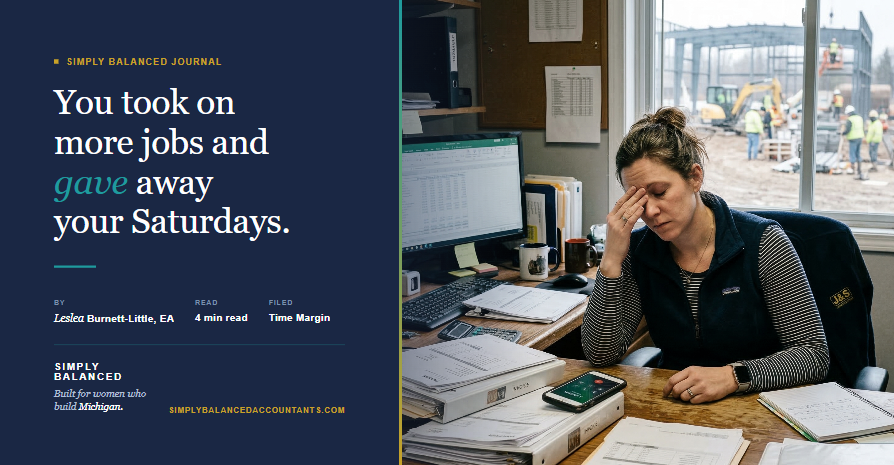
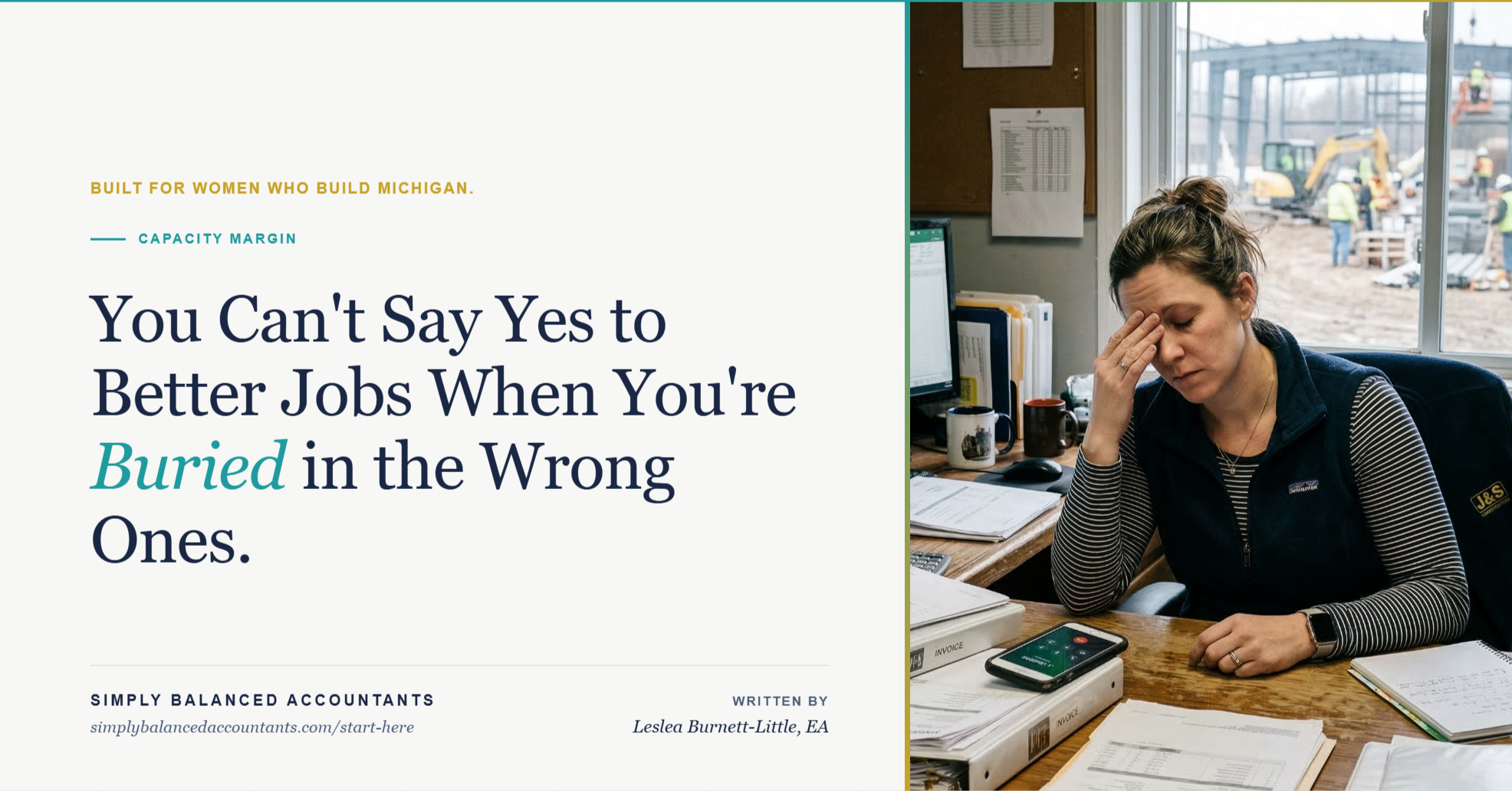
You've been chasing a job like this for three years. Then it finally called — and there was no room in the schedule for it.
The schedule was already full. Full of jobs you took because the phone rang. The repeat customer who's always been good to you. The friend of a friend. The warranty callback that turned into two more days. The job you quoted at last year's price because you'd already given your word.
None of those were mistakes. Every one of them made sense the day you said yes.
Put them together and they cost you the best job of the year.
You didn't lose that job on price. You lost it because there was no room left.
That's growth out of control.
From the outside, growing and growing out of control look exactly the same. More crew. More trucks. More revenue than you've ever run. Everyone around you says the year is going great, and by the only number they can see, they're right.
Inside, something's off and you can't name it. Every new yes feels heavier than the last one. The wins stop feeling like wins. You're doing more than you've ever done and there's less to show for it.
Here's why. When the wrong work fills the space first, growth stops being a choice. It becomes something that happens to you.
The real problem is one sentence long. You're trying to get to a million dollars on a $300K playbook.
The system that got you here can't hold what you're carrying now. How you quote. How you schedule. How you decide what to take. All of it was built for a smaller company — and it worked. That's the trap. It worked so well you never changed it.
Run the number.
You already have the answer. It's in your own books. You've just never gone and looked.
Pull last year's jobs. Not revenue — revenue is the number that lies to you. Take each job and subtract what it actually cost. Materials. Labor. Drive time. The change orders you ate. The two extra days nobody billed for.
Now sort them, best to worst.
Look at the bottom of that list. That's the work that filled your schedule the day the dream job called.
Most owners never run that sort. Not because it's hard — because they're afraid of what it says about the last three years. It doesn't say anything about you. It's inventory. You can't choose better work until you know which work was better.
I grew out of control.
My playbook for 300 clients didn't work for 900. I was delivering at 65% because I couldn't be everything to everyone. I couldn't build the relationships I wanted with my clients. I was taking work that wasn't profitable and giving away my time, my knowledge, and my expertise.
From the outside, the firm looked successful. Inside, it had outgrown its ability to choose — and I was the one carrying the difference.
And I knew it for a long time before I did anything about it.
Because turning away work felt like going backwards. Because every one of those clients was a real person who trusted me. Because a full schedule felt like proof I'd made it, and an emptier one felt like the exact thing I'd been afraid of since the day I started.
That's the honest reason. It was never a math problem. I can do that math in my sleep. It's that I'd let a full calendar mean something about my worth.
So I looked at which work actually returned what it cost — and I stopped taking the work that didn't. I cut my client list and made room for the clients who valued my time, my knowledge, my expertise, and the relationship.
Same revenue. Half the chaos.
But I can't turn down work.
You're not turning down work. You're choosing which work.
The fear is that the phone stops ringing. It doesn't. What stops is the work that was never paying you — and that space doesn't stay empty for long, because the right job has been calling all along and finding you full.
Same for the crew. Keeping them busy is not the same as keeping them paid. A crew booked solid on low-margin work is a crew you'll be sweating payroll over in ninety days. Ask anyone who's done it.
What it looks like on the other side.
The dream job calls and you say yes. Not because the timing worked out. Because you built the room on purpose.
You quote less and win more. You know which jobs you want before the phone rings, so deciding takes a minute instead of a week. There are gaps in your schedule and the gaps don't scare you anymore, because you know what they're for.
That's what capacity really is. The room to say yes to the right work, because you didn't already give that room away to the wrong work.
When the dream job calls, capacity is what answers.
So ask yourself honestly. Am I growing — or growing out of control?
Both look the same from the road. Only your numbers can tell you which one you're in.
This is one stage out of four. The book walks all four — where you are right now, what it's costing you, and what has to change before the next one is possible.
→ From Hustle to Architect: simplybalancedaccountants.com/stage-guide
Leslea Burnett-Little, EA, is the founder of Simply Balanced Accountants. She works exclusively with women who own and operate contractor businesses in Michigan — helping them get clear on their numbers, keep more of what they earn, and build a business that works for their family.